7 Signs Your San Antonio Home Needs a Water Softener
Living in San Antonio means dealing with some of the hardest water in Texas. Most of the city's water comes from the Edwards Aquifer, a limestone formation that naturally fills our supply with dissolved calcium and magnesium. Water hardness here commonly measures between 15 and 20 grains per gallon (GPG), well above the 7 GPG threshold considered "very hard."
Those minerals aren't a health hazard, but they are a slow, steady drain on your home. If you've noticed changes in your plumbing, appliances, skin, or laundry, it may be time to ask whether you need a water softener. Here are seven clear signs that hard water is taking a toll on your San Antonio home, along with practical San Antonio hard water solutions.
1. White Mineral Buildup on Faucets and Fixtures
The most visible sign of hard water is the chalky white crust that forms around faucets, showerheads, and aerators. This residue is calcium and magnesium left behind when water evaporates. If you find yourself scrubbing your fixtures with vinegar every few weeks just to keep them looking clean, you're fighting a losing battle against the water itself. A whole-house water softener removes those minerals before they ever reach your taps, so the buildup stops at the source.
2. Cloudy, Spotty Dishes After the Dishwasher
When your glassware comes out of the dishwasher covered in a cloudy film or white spots, hard water is usually to blame. As the wash water evaporates during the dry cycle, dissolved minerals are baked onto the surface of your dishes. Rinse aids and extra detergent can help a little, but they can't change what's in the water. Soft water lets your dishwasher perform the way it was designed, leaving glasses sparkling clean. Learn more about this in our guide on why dishes come out spotty.
3. Dry, Itchy Skin and Dull Hair
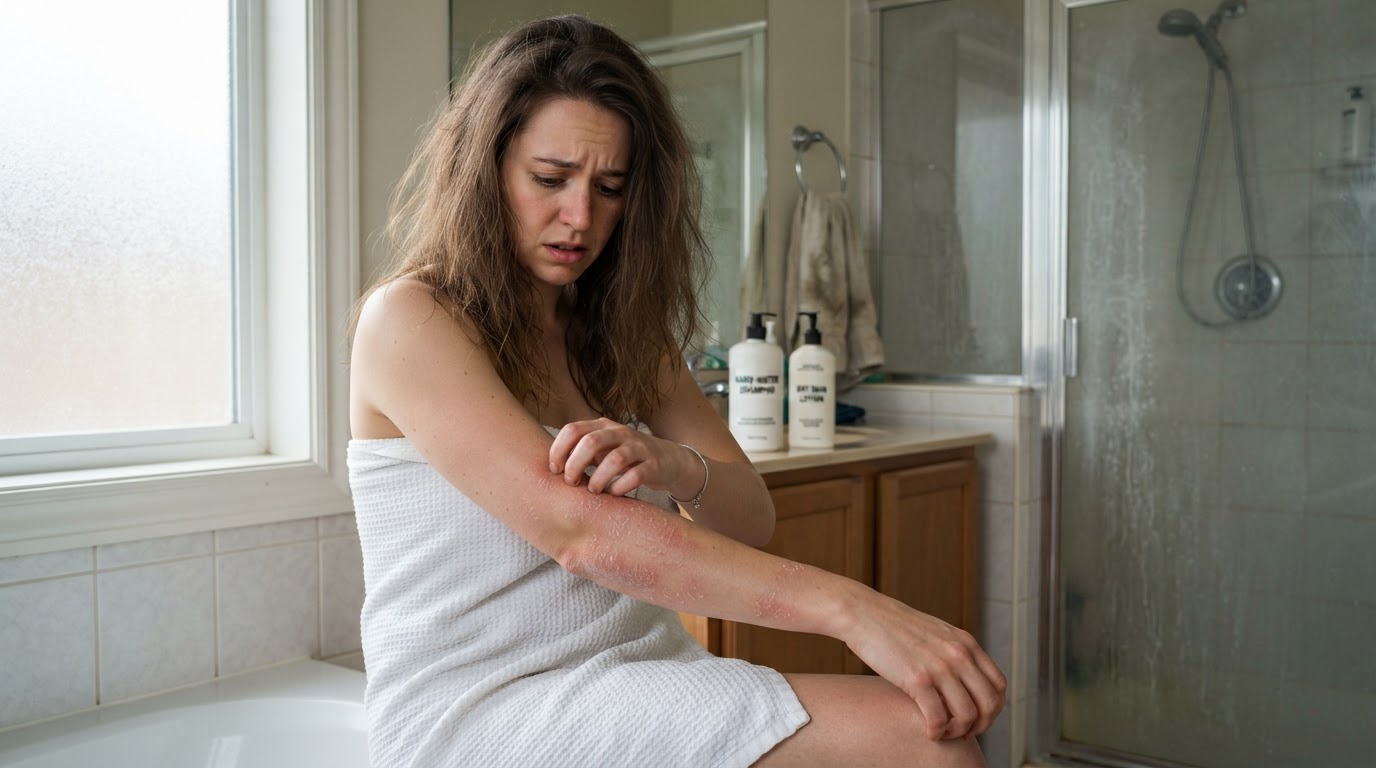
Hard water leaves a microscopic film of mineral residue on your skin and hair every time you shower. Many San Antonio homeowners notice their skin feels dry or itchy after bathing and that their hair looks flat or dull despite using quality products. That same residue can also worsen conditions like eczema. Once a softener is installed, shower water rinses clean and most people notice softer skin and more manageable hair within days.
4. Soap That Will Not Lather
Calcium and magnesium react with soap to form a sticky scum instead of a rich lather. If you find yourself using twice as much shampoo, body wash, laundry detergent, or dish soap just to get things clean, hard water is likely the culprit. With soft water, a little soap goes a long way, and you'll often cut your cleaning product use significantly.
5. Stiff, Faded Laundry
Hard water is tough on fabric. Mineral deposits trap soap scum inside clothing fibers, leaving towels feeling scratchy and colors looking faded. Over time, washing clothes in hard water shortens the life of your wardrobe and linens. Soft water helps detergents rinse out completely, so fabrics stay softer and brighter for longer.
6. Plumbing Buildup and Dropping Water Pressure
The same scale that coats your faucets also lines the inside of your pipes. Year after year, that buildup narrows the interior of your plumbing, restricting flow and lowering water pressure throughout the house. Left unchecked, it can lead to clogs, leaks, and expensive repairs behind walls or under the foundation. Installing a water softener protects your plumbing from further damage.
7. Appliances Wearing Out Faster
Water heaters, dishwashers, and washing machines all suffer when hard water scale builds up inside them. In a water heater, scale acts as an insulator, forcing the unit to work harder, use more energy, and fail years before it should. A water heater that should last 12 to 15 years may give out in as few as 5 to 7 in a hard water home. Softening your water helps these appliances run efficiently and last their full intended lifespan. Read more in our breakdown of the hidden cost of hard water.
What to Do Next
If you recognize more than one or two of these signs, the most reliable next step is a professional water test. As a local water softener company in San Antonio, Water Softeners of San Antonio offers free in-home water analysis so you know exactly what's in your water before you invest in anything. We'll help you choose the best water softener for your San Antonio home, install it professionally, and back it with ongoing support.
Ready to find the right system? Explore our water softener and reverse osmosis systems, or request your free water test today.
Frequently Asked Questions
How do I know if I need a water softener?
Common signs you need a water softener include white scale on faucets, spotty dishes, dry skin, soap that won't lather, stiff laundry, dropping water pressure, and appliances wearing out early. If you notice several of these, a water hardness test can confirm the problem.
How hard is San Antonio water?
San Antonio water typically measures between 15 and 20 grains per gallon, which is classified as extremely hard. The minerals come from the limestone Edwards Aquifer that supplies most of the area's water. Learn more in our article on why San Antonio's water is so hard.
What's the best water softener for San Antonio homes?
The best water softener for San Antonio depends on your home size, water usage, and hardness level. A free in-home analysis lets us size the system correctly so it handles the area's 15 to 20 GPG hardness without wasting salt or water. Compare your options in our guide to solutions for hard water.
Can a water softener help my skin and hair?
Yes. Soft water rinses clean without leaving mineral residue, so many people notice softer, less itchy skin and more manageable, shinier hair after switching. It can also reduce irritation for those with sensitive skin or eczema.
How much does a water softener cost in San Antonio?
Costs vary based on system type and installation, but many homeowners find a softener pays for itself over time through lower energy bills, longer-lasting appliances, and reduced spending on soap and detergents. We offer free quotes and financing options to make it affordable. Request a free water test to get started.