
The Cost of Hard Water for San Antonio Homeowners
If you own a home in San Antonio, Boerne, or New Braunfels, you are likely no stranger to the effects of hard water. But while the chalky residue on your faucets and the spots on your glassware are visible annoyances, the true cost of hard water is often hidden deep within your home's plumbing and appliances. In this comprehensive guide, we'll break down exactly how much hard water might be costing you each year, and why investing in a whole-home water softening system is one of the smartest financial decisions a Texas homeowner can make.
Understanding San Antonio's Water Hardness
To understand the cost, we first need to understand the source of the problem. San Antonio draws the majority of its municipal water from the Edwards Aquifer, a vast underground limestone rock formation. As rainwater percolates through this limestone, it dissolves high amounts of calcium and magnesium.
Water hardness is typically measured in Grains Per Gallon (GPG). Water is considered "very hard" when it exceeds 7 GPG. In the greater San Antonio area, it's not uncommon for water hardness to range between 15 and 25 GPG. This extreme level of hardness means that every time you turn on a tap, run your dishwasher, or take a shower, a significant amount of dissolved rock is flowing through your home's infrastructure.
The Impact on Major Appliances
Your home's water-using appliances are the first casualties in the battle against hard water. When hard water is heated, the dissolved calcium and magnesium precipitate out of the water and form a solid crust known as scale. This scale buildup is particularly devastating to your water heater.
Water Heaters: A traditional tank water heater relies on a heating element at the bottom of the tank. As scale accumulates, it forms a thick, insulating layer between the heating element and the water. This forces the unit to work significantly harder and run longer to heat the same amount of water, driving up your energy bills. Furthermore, this constant overheating drastically shortens the lifespan of the unit. A water heater that should last 12-15 years may fail in just 5-7 years in a hard water environment without treatment.
Dishwashers and Washing Machines: Similar to water heaters, the heating elements and internal plumbing of dishwashers and washing machines are highly susceptible to scale. The mineral deposits can clog valves, ruin pumps, and degrade rubber seals. Replacing a high-end dishwasher or washing machine prematurely can easily cost a homeowner between $800 and $1,500.
Plumbing and Fixture Deterioration
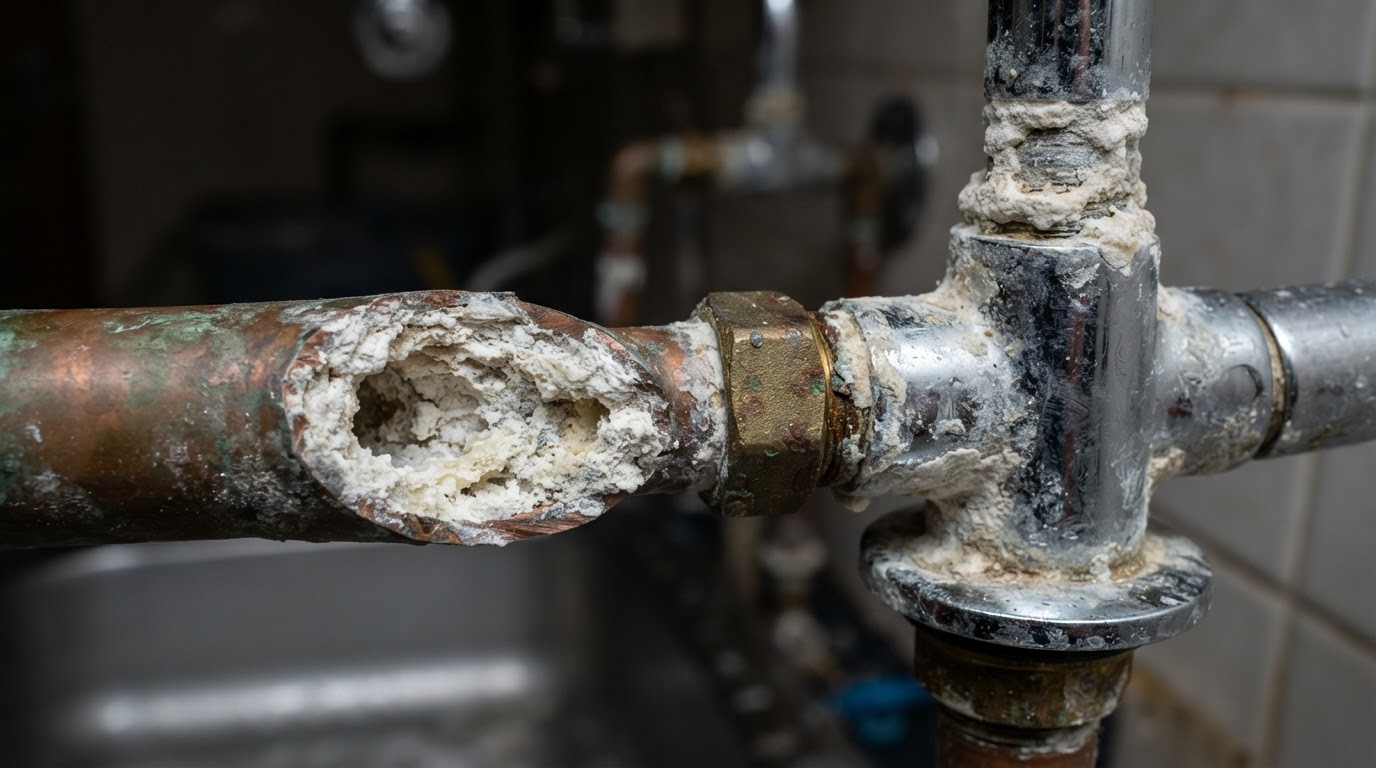
The pipes hidden behind your walls are also slowly being choked by hard water. Over years of exposure, scale builds up on the interior walls of galvanized steel, copper, and even some plastic piping. This reduces the internal diameter of the pipes, restricting water flow and reducing water pressure throughout your home.
Eventually, this restriction can lead to complete blockages or cause pressure to build up to the point where pipes burst or joints fail. A major plumbing repair involving opening up walls or tearing up foundational slabs can cost thousands of dollars. Even on a smaller scale, you'll find yourself frequently replacing showerheads, faucet aerators, and toilet flapper valves that have been ruined by mineral encrustation.
The Hidden Cost of Cleaning Supplies
One of the most overlooked costs of hard water is its interference with soaps and detergents. The calcium and magnesium ions in hard water react with the chemical compounds in soap to form a sticky, insoluble precipitate known as soap scum, rather than a rich, cleansing lather.
Because the soap is binding with the minerals instead of cleaning your clothes, dishes, or skin, you are forced to use significantly more product to achieve the desired result. Studies have shown that households with hard water use up to 50% more laundry detergent, dish soap, shampoo, and body wash compared to households with soft water. Over the course of a year, this increased consumption of cleaning supplies can add hundreds of dollars to your grocery bill.
Additionally, the harsh minerals in hard water are abrasive to clothing fibers. Washing your clothes in hard water causes them to fade faster, lose their softness, and wear out more quickly, meaning you'll spend more money replacing your wardrobe.
Calculating the True ROI of a Water Softener
When you add up the premature replacement of appliances, the increased energy bills from an inefficient water heater, the frequent plumbing repairs, and the inflated cost of cleaning supplies, hard water can easily cost a San Antonio homeowner an extra $800 to $1,200 every single year.
While a high-quality, whole-home water softening system requires an upfront investment, it is one of the few home improvements that actually pays for itself. By eliminating the destructive minerals at the point of entry, a water softener protects your entire home's infrastructure. Your appliances will run efficiently and last their full intended lifespan, your pipes will remain clear, and you'll drastically reduce your spending on detergents and soaps.
If you're tired of paying the hidden taxes of hard water, contact Water Softeners of San Antonio today for a free, no-obligation water analysis. We'll show you exactly what's in your water and help you find the perfect solution to protect your home and your wallet. Learn more about why San Antonio's water is so hard.