
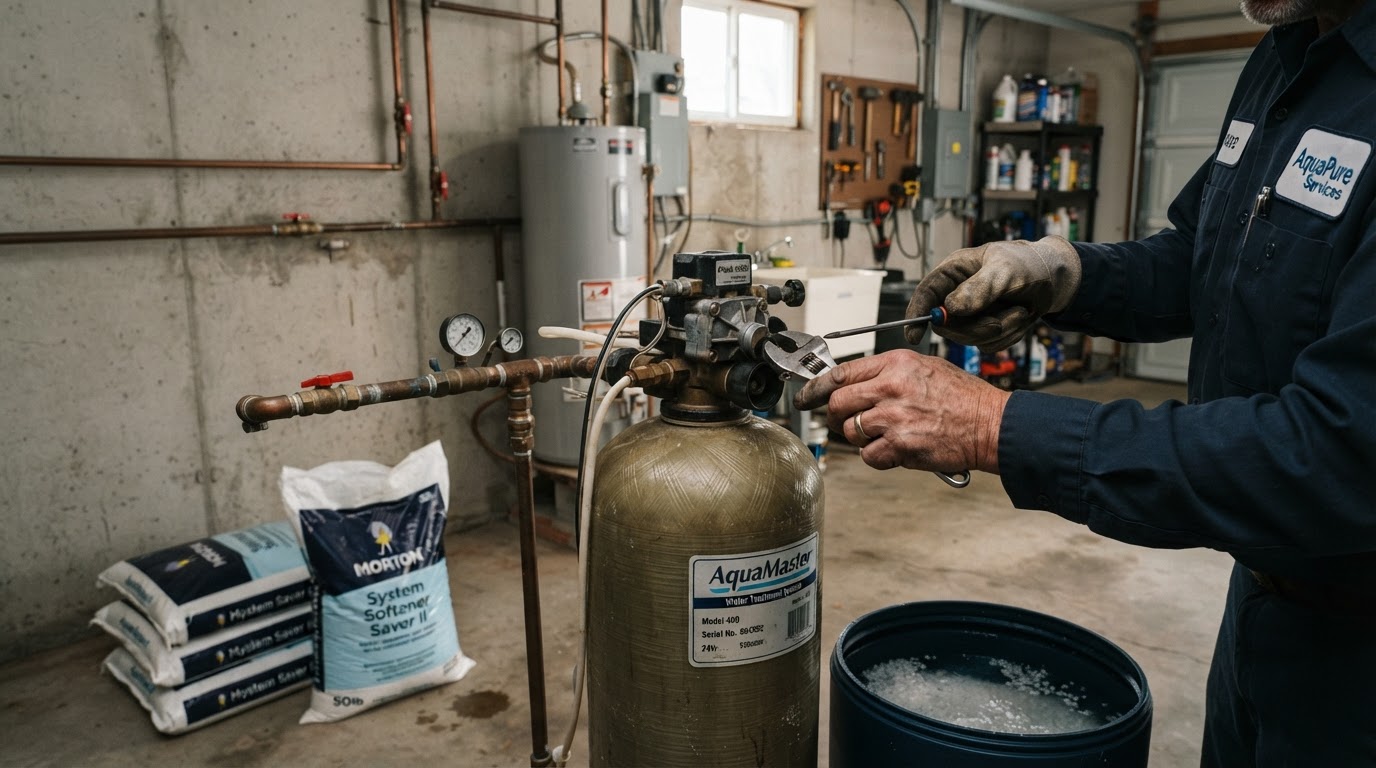
How Long Do Water Softeners Last in San Antonio?
If you have had the same water softener for a decade or more, you may be wondering whether it is still doing its job. A common question we hear from homeowners is, "how long do water softeners last?" The honest answer is that it depends on the quality of the system, how well it has been maintained, and the hardness of the water running through it. Here in San Antonio, that last factor matters a lot, because our water is among the hardest in Texas.
How Long Do Water Softeners Last on Average?
A good quality water softener is built to last. In general, a well-maintained system can keep performing reliably for roughly 10 to 15 years, and some units continue working well beyond that range. The lifespan breaks down by component, since a softener is really a collection of parts rather than a single device:
- Resin bed: The resin beads that actually remove the hardness minerals are often the heart of the system. A resin bed can last about 10 to 15 years under normal conditions before it loses its ability to soften effectively.
- Control valve: The valve that directs water through the regeneration cycles is a mechanical part. It typically lasts around 10 to 20 years, depending on usage and water quality.
- Brine tank: The brine tank that holds the salt is a durable plastic component that can outlast the rest of the system, provided it is kept clean and free of salt bridges.
So when someone asks how long do water softeners last, the short answer is roughly a decade or more, but a number of factors can push that number up or down.
How San Antonio's Hard Water Affects Lifespan
Water hardness is measured in grains per gallon (GPG), and anything above 7 GPG is considered hard. San Antonio's water, drawn largely from the limestone Edwards Aquifer, commonly measures between 15 and 20 GPG. That means our water carries a very heavy load of dissolved calcium and magnesium.
An old water softener system in San Antonio has to work harder than the same unit in a city with softer water. Every gallon that passes through deposits more minerals onto the resin bed, which forces the system to regenerate more often. More frequent regeneration means more wear on the control valve, more salt consumption, and faster fatigue of the resin beads. In other words, the same softener that might last 15 years elsewhere could age faster simply because our water demands more from it day in and day out.
Learn more about the source of the problem in our article on why San Antonio's water is so hard.
What Can Shorten a Water Softener's Lifespan?
Even a quality system can fail early if it is neglected or put under extra stress. A few common culprits shorten the working life of a softener:
- Skipped maintenance: Failing to add salt, ignoring salt bridges, and never cleaning the brine tank all let sediment and buildup accumulate, which strains the whole system.
- Wrong system size: An undersized softener regenerates far more often than it should, wearing out the valve and resin prematurely.
- Iron and sediment: If your water contains iron or sediment in addition to hardness, those contaminants can coat and foul the resin bed, reducing its capacity.
- Hard water bypassing the system: A small plumbing leak or a misconfigured bypass valve can let untreated water flow past the softener, hiding problems until they become serious.
Signs Your Older System May Need Repair or Replacement
Water softeners rarely fail all at once. More often, they send out gradual warning signs that something is wrong. If you notice any of the issues below, it may be time to consider water softener repair in San Antonio, or a full water softener replacement.
Changes in water quality
The clearest sign is the return of the very problems the softener was installed to fix. If you start seeing white scale on your faucets, spotty dishes, or dry skin and hair again, your system may no longer be removing hardness effectively. A drop in performance often points to a tired resin bed or a valve that is not regenerating properly.
Frequent salt use
Pay attention to how quickly your brine tank goes through salt. If you suddenly find yourself refilling it far more often than usual, the system may be regenerating too frequently, which can signal a worn control valve or a resin bed that is losing efficiency.
Unusual noises
A softener should run quietly in the background. Grinding, clicking, humming, or banging sounds during regeneration usually mean a mechanical problem inside the valve or motor. Ignoring these noises can turn a small repair into a full failure.
Low water pressure
If water pressure drops throughout the house, a clogged resin bed, sediment buildup, or a failing valve could be restricting flow. Low pressure that coincides with a softener problem should never be ignored, because it can also point to scale building up in your plumbing.
Recurring mineral buildup
When scale returns on showerheads, faucets, and glassware soon after you clean them, the softener is no longer keeping up. Recurring buildup is a strong indicator that the system has reached the end of its useful life or needs professional service.
Practical Water Softener Maintenance Tips
Good water softener maintenance in San Antonio can add years to your system's life. A few simple habits go a long way:
- Keep the brine tank stocked: Check salt levels monthly and top off before the tank runs empty, since an empty tank stops the softening process.
- Use the right salt: High-quality salt leaves less sediment behind. Avoid rock salt, which contains impurities that can foul the resin bed.
- Break up salt bridges: A hard crust can form across the salt, leaving an empty space below. If you see a bridge, break it up so water and salt can mix properly.
- Clean the brine tank: Once or twice a year, empty and clean the tank to remove sediment and sludge.
- Schedule professional checkups: An annual inspection catches worn valves, low resin capacity, and small leaks before they become major problems.
If you are unsure how your system is performing, a professional free water test is the easiest way to find out whether your softener is still doing its job.
Repair or Replace: Making the Right Call
When problems appear, homeowners face a choice between repair and replacement. As a general guideline, isolated issues like a worn valve or a salt bridge are usually repairable, while a system that is near the end of its expected life and showing multiple warning signs at once is often better replaced.
Repeated repairs on an old water softener system tend to add up quickly, and an aging system wastes salt and water while it struggles to keep up with San Antonio's extreme hardness. In those cases, water softener replacement in San Antonio is often the more sensible long-term choice, since a properly sized, efficient new system protects your plumbing and appliances for years to come.
As a local San Antonio water treatment company, Water Softeners of San Antonio can inspect your current system, test your water, and give you an honest recommendation, whether that turns out to be a simple repair or a full replacement. We proudly serve homeowners across the region, including Boerne, New Braunfels, Helotes, and Leon Valley.
Frequently Asked Questions
How long do water softeners last in San Antonio?
A typical water softener lasts roughly 10 to 15 years, but in San Antonio's very hard water a system may age faster because it has to regenerate more often. Regular maintenance helps a unit reach the higher end of that range.
What are the signs I need water softener replacement?
Common signs include returning scale and spots, more frequent salt use, strange noises during regeneration, low water pressure, and recurring mineral buildup. If several of these appear at once, replacement is often the better option than continued repairs.
Can an old water softener system be repaired?
Yes. Many issues, such as a worn valve, a salt bridge, or a clogged injector, can be repaired without replacing the whole unit. A professional inspection is the best way to tell whether a repair will solve the problem or whether replacement makes more financial sense.
How often should I service my water softener?
Most homeowners benefit from an annual professional checkup, along with monthly salt level checks and a yearly brine tank cleaning. Staying on top of these tasks is the core of good water softener maintenance.
Does San Antonio's hard water really shorten a softener's life?
It can. Because our water carries such high levels of calcium and magnesium, a softener here regenerates more often and handles a heavier mineral load, which can wear the resin and valve faster than in areas with softer water.
Schedule a System Inspection
If your water softener is getting older or you have noticed any of the warning signs above, the smartest next step is a professional inspection. Water Softeners of San Antonio offers system checkups and a free in-home water test so you know exactly how your softener is performing and what your water really contains. Request your free water test today, or explore our water softener systems if you are ready for a replacement. You can also read more about what hard water costs San Antonio homeowners or check the signs you need a water softener.