
Reverse Osmosis vs. Water Softeners: Which Does Your Home Need?
When homeowners start researching water treatment, one of the most common points of confusion is the difference between a water softener and a reverse osmosis system. They sound like they do similar things, and both improve the water in your home, but they actually solve very different problems. Understanding the distinction helps you choose the right solution, and in many homes the two work best together. If you are considering water softener installation in San Antonio, here is what you need to know about where reverse osmosis fits in.
What a Water Softener Does
A water softener is a whole-house system designed to remove hardness minerals, primarily calcium and magnesium, from your water supply. It does this through a process called ion exchange. As water passes through a tank of resin beads, the beads trade sodium ions for the calcium and magnesium ions, effectively stripping the hardness out of the water before it reaches your pipes and fixtures.
The result is water that no longer leaves scale buildup on your faucets, shower doors, and appliances. Soft water also helps soap lather more effectively, which means you use less detergent and your skin and hair feel better after a shower. For homes dealing with the very hard water common to San Antonio and the Hill Country, a whole-house softener is usually the foundation of any treatment plan. Read more about the hard water problem in San Antonio to see why this matters so much here.
What Reverse Osmosis Does
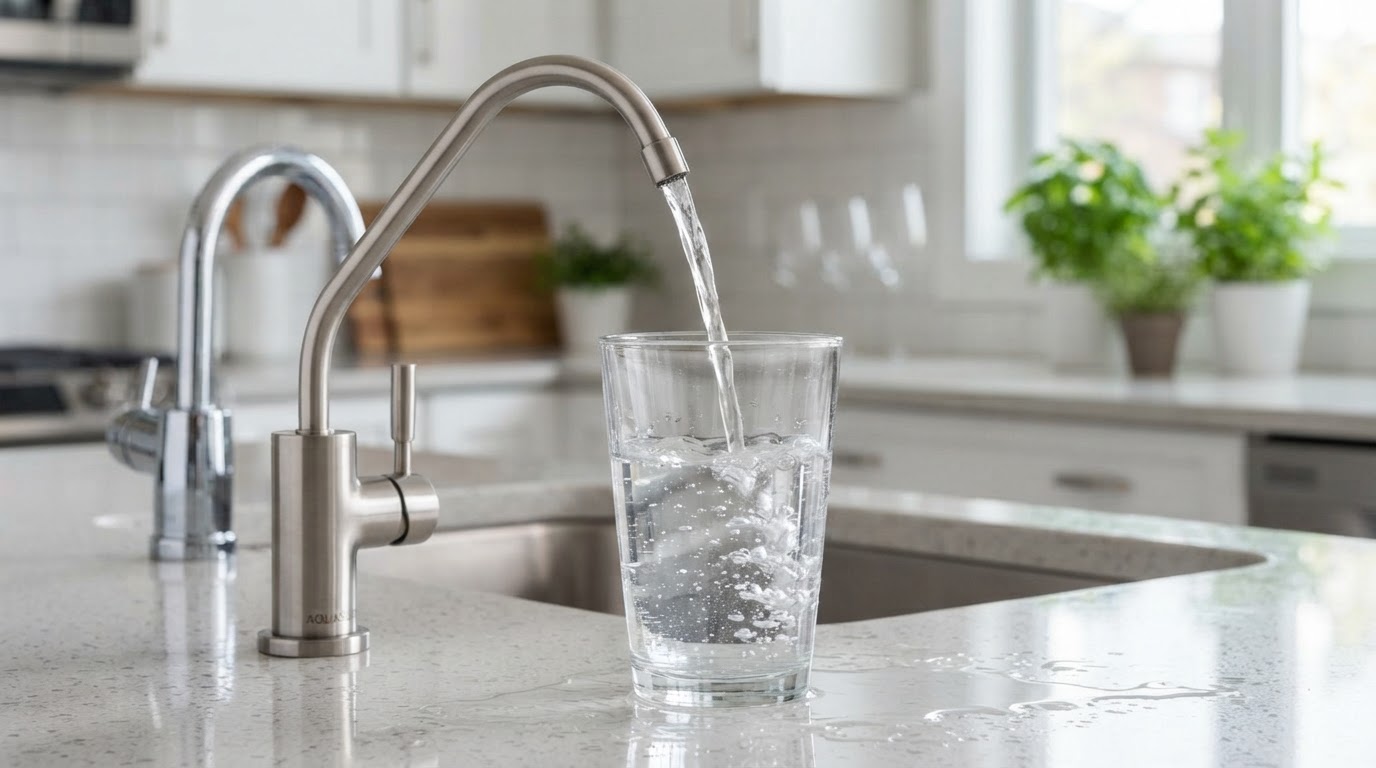
Reverse osmosis, or RO, is a different technology aimed at a different goal. Instead of targeting hardness minerals, an RO system forces water through a semi-permeable membrane that removes a wide range of contaminants, including chlorine, lead, nitrates, and other substances that can affect taste, odor, and overall drinking water quality. The result is clean, great-tasting water straight from a dedicated faucet at your kitchen sink.
RO is a point-of-use system, meaning it treats the water you drink and cook with rather than every drop that enters the home. That makes it a natural complement to a whole-house softener rather than a replacement for one.
Key Differences at a Glance
- Purpose: A softener removes hardness minerals; RO removes a broad range of contaminants for drinking water.
- Coverage: A softener treats the whole home; RO treats water at a single tap, usually the kitchen sink.
- Result: Soft water protects plumbing and appliances; RO water improves taste, odor, and drinking quality.
- Maintenance: Softeners need regular salt refills; RO systems need periodic filter and membrane changes. Learn how to keep yours running in our guide on maintaining your reverse osmosis system.
Do You Need Both?
For many San Antonio-area homes, the answer is yes. A water softener handles the hardness that damages pipes and appliances throughout the house, while a reverse osmosis system polishes the water you actually drink. Because RO membranes can be damaged by hard water over time, softening the water first actually helps the RO system last longer and perform better. The two technologies work as a team.
If you are only concerned about drinking water taste, RO alone may be enough. But if you are seeing scale buildup, spotty dishes, or dry skin, a softener should come first. You can explore our full lineup of water softener and reverse osmosis systems to compare your options.
How to Choose the Right System
The right setup depends on what is actually in your water and what you want to improve. That is why a free water test is the smart first step. Testing reveals your hardness level and any other contaminants worth addressing, so you do not pay for capacity you do not need or miss a problem you should be treating. A properly sized system, matched to your household water use, will perform better and last longer than a generic unit.
We help homeowners across the region choose the right combination, including those looking for water softeners in New Braunfels and Boerne. Not sure how long a system will last? Our article on water softener lifespan explains what to expect.
Frequently Asked Questions
Is reverse osmosis the same as water softening?
No. Water softening removes hardness minerals like calcium and magnesium from the whole home. Reverse osmosis removes a broader range of contaminants from your drinking water at a single tap. They solve different problems and often work best together.
Does reverse osmosis make water soft?
RO does reduce dissolved minerals, including hardness, in the water it treats. But because an RO system is typically installed at one faucet, it does not protect your pipes, water heater, and appliances the way a whole-house softener does.
Can I install reverse osmosis without a water softener?
You can, but in a hard-water area the RO membrane may clog or wear out faster because it has to work harder against the mineral load. Softening the water first protects the RO system and extends its life.
How often do RO filters need changing?
Most pre-filters and post-filters should be changed every 6 to 12 months, while the RO membrane typically lasts 2 to 3 years depending on water quality and usage. See our RO maintenance guide for details.
Schedule Your Free Water Test
The best way to decide between a water softener, reverse osmosis, or both is to start with a free in-home water test. Water Softeners of San Antonio will test your water, explain the results in plain language, and recommend only what your home actually needs. Request your free water test today, or browse our water treatment systems to learn more.